
Peruvian opera and music of the Incas: the legacy of José María Valle-Riestra
Giancarlo Carreño Arce
Thursday, November 5, 2026
We have received the following from Giancarlo Carreño Arce (Universidad Nacional de Música, Lima, Peru). (Spanish translation at the bottom of the article)
November 9, 2026 marks the 168th birthday of José María Valle-Riestra, who is considered one of the most important composers in Peruvian history. He was among the first to incorporate Pre-Hispanic and Andean musical elements into a large-scale project such as an opera. His contribution to music education in Peru is also very significant. His theoretical writings helped to modernize musical training in the country.
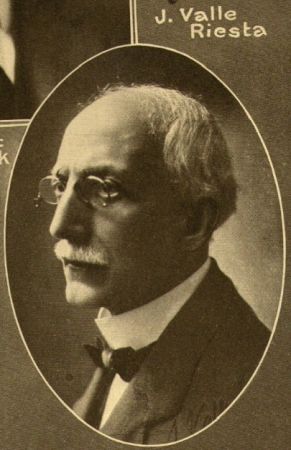
José María Valle-Riestra was born in Lima, Peru, in 1858. He began his music training at the age of nine, when his parents took him to London. However, the most significant period in his education was between 1895 and 1897, when he had the opportunity to study counterpoint, fugue, and orchestration at the Paris Conservatoire with André Gédalge, the influential music teacher who was also known for his role in the musical training of composers such as Florent Schmitt and Maurice Ravel.
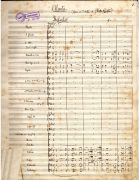
Upon his return to Peru in late 1897 and inspired by the nationalist trend that emerged in the aftermath of the war with Chile, he began to work alongside librettist Federico Blume on the opera Ollanta (RISM ID no. 1001379753; RISM Catalog | RISM Online. This dramatic work tells a tragic love story set in the ancient Inca Empire, and its music features traditional Peruvian genres – such as the yaraví and the cashua – blended with classical European musical forms. The opera premiered in 1900 with limited success; it was revived in 1920 with new musical arrangements and a revised libretto (RISM ID no. 1001382242; RISM Online) and was met with critical and popular acclaim.
Valle-Riestra’s catalog includes his unfinished opera Atahualpa (RISM ID no. 1001381015; RISM Catalog | RISM Online), several orchestral pieces, a few Lieder, the motet O salutaris (RISM ID no. 1001367006; RISM Catalog | RISM Online), and a highly acclaimed Requiem Mass (RISM ID no. 1001389868; RISM Online).
Image on the right: Portrait of José María Valle Riestra; Creative Commons CC0 1.0 Universal Public Domain Dedication via Wikimedia Commons.
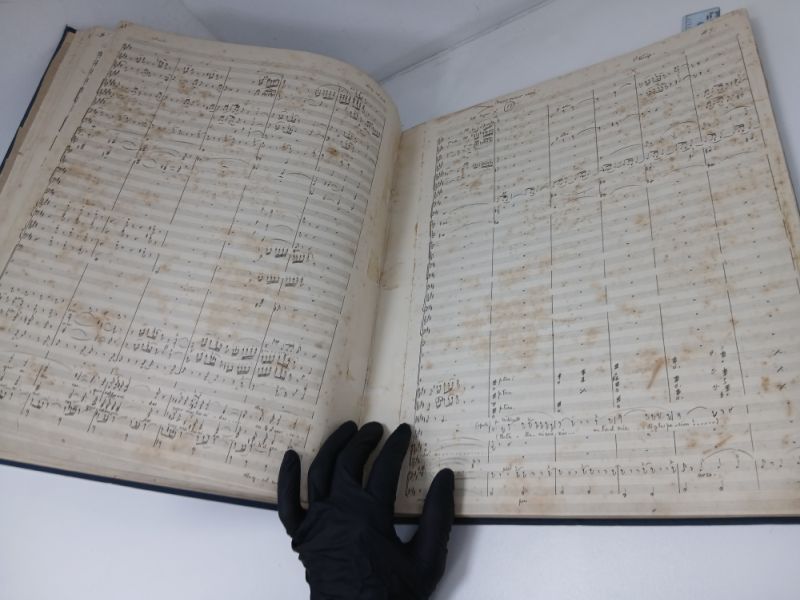
Manuscript of Ollanta, held at the Universidad Nacional de Música (UNM), Lima, Peru. Courtesy of @ Universidad Nacional de Música (UNM) | Giancarlo Carreño (photograph).
Many of his manuscripts are held by the Biblioteca Nacional del Peru (Library siglum: PE-Lbnp; RISM Catalog | RISM Online and the library of the Universidad Nacional de Música (Library siglum: PE-Lcnm; RISM Catalog | RISM Online, originally known as the Academia Nacional de Música, where Valle-Riestra served as deputy director. These sources are currently being incorporated into RISM, and digital copies of many of his works are available through the RISM records (RISM Online | RISM Catalog).
José María Valle-Riestra sought to preserve elements of Peruvian culture in his music. His musical legacy continues to be rediscovered by researchers and contemporary musicians who acknowledge his contribution to the national heritage and his influence on the development of academic music in Peru.
Image on the top: Digitized first page of the manuscript of Ollanta. Courtesy of @ Universidad Nacional de Música (UNM), Lima, Peru.
Ópera peruana y música de los incas: el legado de José María Valle-Riestra
El 9 de noviembre de 2026 se cumplen 168 años del nacimiento de José María Valle-Riestra, considerado uno de los compositores más importantes en la historia del Perú. Fue uno de los primeros en incorporar elementos musicales prehispánicos y andinos en un proyecto de gran envergadura como una ópera. Su contribución a la educación musical en el Perú también es muy significativa. Sus escritos teóricos contribuyeron a modernizar la formación musical en el país.
José María Valle-Riestra nació en Lima, Perú, en 1858. Comenzó su formación musical a los nueve años, cuando sus padres lo llevaron a Londres. Sin embargo, el período más significativo de su educación tuvo lugar entre 1895 y 1897, cuando tuvo la oportunidad de estudiar contrapunto, fuga y orquestación en el Conservatorio de París con André Gédalge, el influyente profesor de música, conocido también por su papel en la formación musical de importantes compositores como Florent Schmitt y Maurice Ravel.
Tras regresar al Perú a finales de 1897, e inspirado por la corriente nacionalista que surgió tras la guerra con Chile, comenzó a trabajar con el libretista Federico Blume en la ópera Ollanta (RISM ID no. 1001379753; RISM Catalog | RISM Online. Esta obra dramática narra una trágica historia de amor ambientada en el antiguo Imperio inca, y su música presenta géneros tradicionales peruanos —como el yaraví y la cashua— combinados con formas musicales clásicas europeas. La ópera se estrenó en 1900 con escaso éxito; en 1920, se reestrenó con nuevos arreglos musicales y un libreto revisado (RISM ID no. 1001382242; RISM Online), y recibió elogios tanto de la crítica como del público.
El catálogo de Valle-Riestra incluye su ópera inconclusa Atahualpa (RISM ID no. 1001381015; RISM Catalog | RISM Online), varias piezas orquestales, algunos Lieder, el motete O salutaris (RISM ID no. 1001367006; RISM Catalog | RISM Online) y una misa de réquiem muy aclamada (RISM ID no. 1001389868; RISM Online). Muchos de sus manuscritos se conservan en la Biblioteca Nacional del Perú (Sigla de Biblioteca: PE-Lbnp; RISM Catalog | RISM Online y en la biblioteca de la Universidad Nacional de Música (Sigla de Biblioteca: PE-Lcnm; RISM Catalog | RISM Online, institución conocida originalmente como Academia Nacional de Música, donde Valle-Riestra se desempeñó como subdirector. Estas fuentes se están incorporando actualmente al catálogo de RISM, y es posible acceder a copias digitales de muchas de sus obras a través de los registros de RISM (RISM Online | RISM Catalog).
José María Valle-Riestra buscó preservar elementos de la cultura peruana en su música. Su legado musical continúa siendo redescubierto por investigadores y músicos contemporáneos, quienes reconocen su contribución al patrimonio nacional y su influencia en el desarrollo de la música académica en el Perú.
Share Tweet EmailCatégorie: Evénements
